Our sister site:System Enablers — opens in a new tab
Innovation LabsBring us the decision
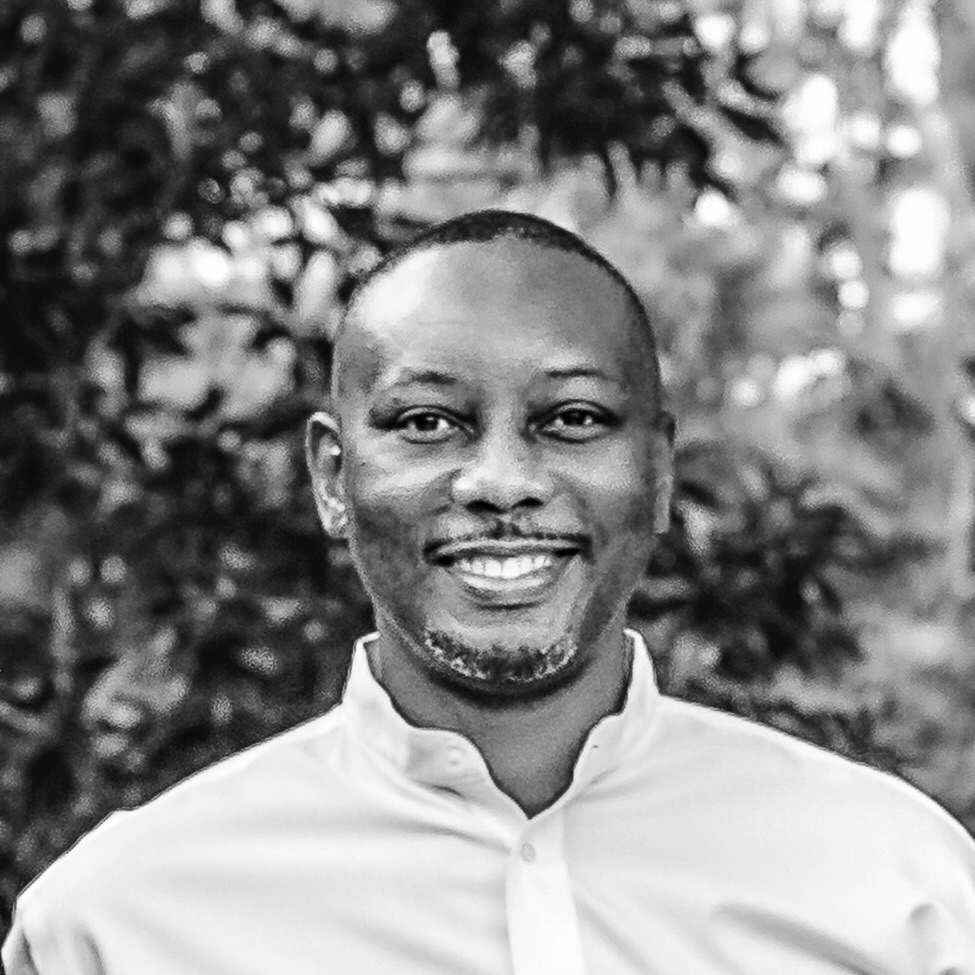
Founder & Managing Director
You see a health possibility worth backing. FHIL helps you find out whether it can work before your institution makes the larger commitment.
You retain the ambition, authority over capital, and final decision. FHIL becomes the accountable operating team around it.
The cross-system investigation, smallest useful build, real-condition testing, and source-traceable decision record.
Every mandate, any required specialist contributions, and FHIL's final integrated recommendation.
Led by Victor Ladele, FHIL examines the clinical evidence, technology, users, delivery pathway, governance requirements, and emerging alternatives. We build only what the decision requires and give you a documented basis for what to do next.
Victor has delivered foundation-commissioned research and a paid AI-assisted patient tool. He has also led innovation inside UNDP and UNICEF. His experience spans direct patient care, epidemic response, public-health portfolios, institutional evaluation, and AI-supported product development.
Institutional authority stays with you. FHIL does not bypass governance or assume every idea should proceed. The recommendation may be to proceed, proceed with conditions, redesign, test further, or stop.
Public talks and work artifacts
See Victor explain the operating ideas behind FHIL.
These videos show Victor's public argument and systems practice in his own words. They are communication and method records—not independent evidence of program outcomes.
Public talk · TEDxColumbus · 2017
Trust: the critical element in a health crisis response
Victor explains why trust becomes an operating requirement during crisis response.
Watch on YouTube — opens in a new tabWork artifact based on UNICEF-era practice · 2024
Mental-health innovation requires a systems pathway
Victor explains the systems-innovation approach used in his mental-health practice.
Watch on YouTube — opens in a new tabThe transition Victor leads
Keep today working. Build the transition. Prepare for what comes next.
FHIL does not ask a health institution to abandon the system it is responsible for today. It builds and tests the next operating form while current care, safety, governance, and public obligations remain protected.
- Horizon 1 · The present system
What must work now
Care delivery, safety, governance, workflow, funding obligations, and public trust remain non-negotiable.
- Horizon 2 · FHIL's operating ground
Build and test the transition
Turn one ambition into a working product, pathway, or operating form. Test its decisive assumptions under bounded, real conditions.
- Horizon 3 · The emerging system
What must become possible next
AI-enabled care, new delivery models, prevention, longevity, and distributed or hybrid care can move from possibility toward responsible practice.
Adapted as a transition lens from the Three Horizons framework developed through the International Futures Forum — opens in a new tab.
Biography
From clinical care to institutional innovation.
Victor Ladele, MBBS, MBA, is the founder and managing director of Future Health Innovation Labs in Oklahoma City. For more than two decades, he has worked where consequential health decisions must be made despite incomplete evidence, constrained systems, and significant implementation risk.
Victor began in direct patient care, practicing for approximately a decade in Nigeria and Sudan. His responsibilities included diagnosis, triage, treatment, referral, medical leadership, and care in constrained and conflict-affected settings. During the World Health Organization's Ebola response, he contributed to survivor screening, counselling, and clinical-data practice. Peer-reviewed publications in The Lancet Global Health and the CDC's Emerging Infectious Diseases document selected contributions to that work.
He later moved from individual care into institutional innovation. As UNDP Head of Exploration, Victor worked across emerging needs, portfolio strategy, and innovation practice in the Pacific. At UNICEF, he served as Mental Health Innovation Lead. UNICEF describes the portfolio as spanning more than 20 countries and five regions. His work sat at the intersection of evidence, technology, evaluation, safeguarding, service capacity, and institutional adoption.
Victor founded Future Health Innovation Labs in 2024 to move critical learning earlier—while an institution can still proceed, proceed with conditions, redesign, test further, or stop. He leads every FHIL mandate, integrates specialist contributions when required, and remains accountable for the firm's final recommendation.
FHIL's current work includes the Decision Brief, the ATLAS, and the Portfolio Verification Review. Its commissioned work includes Agora's research and systems mapping, and ATLAS Rare Disease, a condition-specific build for arachnoiditis.
Victor's long-term research interest is the future of rural care delivery. Through Rural Medicine 3.0, he is examining how preventive, longevity, and precision-medicine capabilities could be adapted responsibly for rural primary-care systems rather than remaining concentrated outside them.
Victor holds an MBBS from the University of Ilorin and an MBA in Entrepreneurship from the Acton School of Business. He trained and practiced as a physician outside the United States. He does not provide diagnosis, treatment, prescribing, or patient-specific clinical advice through FHIL.
Our specialist network
Expertise matched to your engagement.
Human-centered design
Data innovation
AI & machine learning
Strategic foresight
Innovation & portfolio management
New business models & innovative finance
Frontier technologies
Culture of innovation
Communications & knowledge sharing
Specialists join as needed, with your approval. Victor remains accountable.
Commissioned work and judgment record
Built for the future. Disciplined by what the evidence can support.
Agora shows Victor's research and systems-mapping work. ATLAS shows his technology-building work. An independent review from his UNICEF-era work shows the other half of the discipline: wider scale should wait when protection and readiness are not yet demonstrated.
Agora
Research into community mental-health support in Nigeria, with systems maps and findings delivered to a Swedish international foundation.
Inspect AgoraATLAS Rare Disease
A working digital on-ramp built for arachnoiditis, with a reusable structure for future condition-specific builds.
Inspect ATLASThe evidence supported a pause.
An independent review recommended delaying wider scale until identified child-protection limitations were addressed and tested.
Read the review — opens in a new tabThese records establish commissioned research, a paid technology build, and an independent recommendation. They do not by themselves establish sustained adoption, clinical effectiveness, or population outcomes—or that the independent recommendation became an institutional decision.
Why this background matters
Implementation failure rarely belongs to one discipline.
An innovation can be clinically promising and still fail because the workflow cannot support it, people do not trust it, the data are weak, escalation is undefined, governance is incomplete, or the institution cannot justify the risk.
FHIL brings those questions together while redesign, further testing, or stopping are still less expensive than correcting a failed deployment.
Operating record
Experience across the path from care to institutional commitment.
Across health systems
Clinical care, crisis response, institutional innovation, and emerging health technology since 2004.
See the public recordIn direct patient care
Diagnosis, triage, treatment, referral, medical-director responsibility, and care under constraint.
See the public recordIn one documented UNICEF portfolio
A five-region mental-health innovation portfolio during Victor's tenure as Innovation Lead.
See the public recordLeading every FHIL mandate
Victor integrates the evidence, specialist contributions, and final FHIL recommendation.
See the public recordSelected operating story
The scale changed. The recurring responsibility did not.
Make the real system visible, establish what responsible action requires, and leave the people accountable with something they can use.
- 01
Clinical care and crisis response
Victor spent approximately a decade in direct patient care in Nigeria and Sudan, including constrained and conflict-affected settings. Medical-director responsibility expanded his work from individual treatment to workforce, facility, referral, and operating discipline. During the WHO Ebola response, he worked on survivor screening, counselling, and clinical-data practice; two peer-reviewed publications document part of that record.
- 02
Public-health innovation inside institutions
As UNDP Head of Exploration and later UNICEF Mental Health Innovation Lead, Victor worked where promising ideas met portfolio strategy, governance, evidence, evaluation, technology, service capacity, and adoption. UNICEF's public record describes a portfolio across more than 20 countries and five regions and identifies his role.
- 03
Decision support through FHIL
Victor founded FHIL to improve health-capital decisions before and after commitment. Current work includes the Decision Brief, the ATLAS, the Portfolio Verification Review, Agora, and ATLAS Rare Disease.
Documented judgment case · UNICEF-era work
The responsible answer was: do not scale yet.
During Victor’s tenure as UNICEF Mental Health Innovation Lead, an independent KonTerra review examined selected mental-health and psychosocial-support chatbot initiatives.
The review found material questions around local readiness, informed consent, data security, red-flag detection, human escalation, child protection, and service capacity. It recommended delaying wider scale until identified child-protection limitations had been addressed and thoroughly tested.
That is central to FHIL’s current work: proceeding, adding conditions, redesigning, testing further, and stopping must all remain credible answers.
Accountability
Victor leads the decision from frame to final recommendation.
The client retains institutional authority. Victor owns FHIL’s integrated judgment.
- 01
Frame the decision
Victor works with the accountable owner to define what must be decided, when, and what evidence could justify each possible next move.
- 02
Integrate the system
He connects clinical and scientific evidence, people and frontline reality, institutional conditions, technology, and emerging change—adding specialists only where the decision requires them.
- 03
Own the recommendation
He keeps conflicting evidence and limitations visible, then delivers FHIL's integrated position and the operating requirements for what comes next.
Execution network
The smallest qualified team the decision requires.
Victor leads every mandate. When a material question falls beyond his direct scope, FHIL proposes a relevant specialist. The client approves the person’s role, cost, conflicts, confidentiality, and data access before they join.
Client decision owner
Sets the commitment and retains approval authority.
Victor · FHIL
Frames, leads, integrates, and delivers the recommendation.
Approved specialists
Examine named questions under explicit boundaries.
One decision record
Evidence, limitations, recommendation, and next requirements.
Selected public record
Roles and publications you can examine.
These records document selected parts of Victor's institutional and publication history.
Institutional roles
Mental Health Innovation Portfolio
Official portfolio context, more than 20 countries and five regions, and Victor’s role as Mental Health Innovation Lead.
See the UNICEF record — opens in a new tabVictor Ladele · Head of Exploration
Official documentation of Victor’s role in the Pacific Accelerator Lab and published innovation practice.
See the UNDP record — opens in a new tabPeer-reviewed publications
National Ebola survivor testing and counselling programme
Documented co-authorship on national survivor-program work. DOI: 10.1016/S2214-109X(16)30175-9.
Read the publication — opens in a new tabEbola Virus RNA in Semen from an HIV-Positive Survivor
Documented co-authorship with a World Health Organization affiliation. DOI: 10.3201/eid2304.161743.
Read the publication — opens in a new tabInstitutional records and co-authorship establish documented roles and contributions; they do not imply sole responsibility for wider institutional work.
Credentials and scope
Clinical training informs the work. Professional authority remains explicit.
Victor Ladele, MBBS, MBA
Based in Oklahoma, United States
Victor trained and practiced as a physician outside the United States, with approximately 10 years in direct patient care. He does not hold a U.S. medical license and does not provide diagnosis, treatment, prescribing, or patient-specific clinical advice through FHIL.
He directly leads decision framing, health-system and pathway analysis, implementation-risk analysis, evidence integration, governance requirements, product and operating-model strategy, and FHIL’s final recommendation. Licensed clinical, legal, regulatory, ethics, security, and other regulated judgments remain with appropriately authorized professionals and institutions.
Choose by capital decision
Before the money moves—or after?
Use the Decision Brief to investigate one health decision. Use the ATLAS to test one innovation before commitment. Use the Portfolio Review to verify funded delivery before the next allocation.
victorladele@fhilabs.comDo not send patient-identifiable, protected, confidential, export-controlled, or institution-restricted information in the initial inquiry.